Looky looky I got booky
Gotta love it when books are gifts:
- H. L. Mencken on Religion, edited by S. T. Joshi - a surprise gift from some old friends. Mencken’s no angel and he does his share of fence-straddling, but for the most part his observations are still as cutting and prescient as they were eighty years ago. Of particular note are his writings on the Scopes trial, especially interesting reading in these heady days of “intelligent design.”
- How the Grinch Stole Christmas by Dr. Seuss - I had forgotten how Seuss could make a wintry landscape look edible; the snow looks like cake icing. And I still think someone will discover an alternate ending buried in some dusty trunk, one in which the Grinch marinates the roast beast with strychnine.
- 1491: New Revelations of the Americas Before Columbus by Charles C. Mann - I hope this is as interesting as it looks. In the current climate of obtuse nationalism it's beneficial to look beyond the boundaries of an institution, and from the few pages I've sampled so far this looks to be enlightening. End pretentious windbagging.
- Bradbury Stories by Ray Bradbury - What a wonderful collection. Bradbury’s style is exquisite; florid, yes, but vivid and tactile. He creates worlds you ache to get lost in.
- McSweeny's Quarterly Concern, Issue 13, guest-edited by Chris Ware - A great find. Ware’s “temporary” stint as editor features his usual jam-packed, elaborately-designed scheme, but there’s more to chew on than just the comics (which are great); there’s an interesting essay by John Updike and a Ware-penned appreciation of an intriguing gallery artist named Philip Guston.
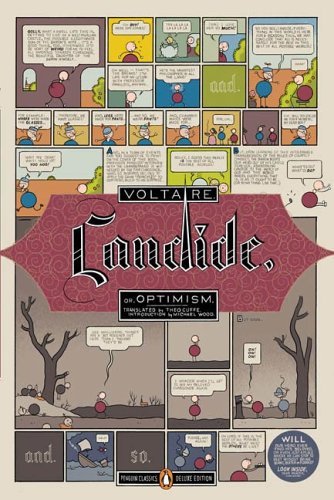
- Candide by Voltaire - Continuing the Ware deluge, this is the edition I profiled in November, with his witty wraparound cover design. Included as a special bonus is the complete text of Candide, too, so it’s double the fun.
- The Early Stories 1953-1975 by John Updike - This one will be fun to dive into. Short-story collections are great to have on hand for lunch breaks, and Updike does ‘em awfully well.
- Marcel Proust: A Life by Jean Yves Tadie - I will never, ever read all of this (986 pages that could double as a murder weapon), but it was a steal at $4 and I love Proust’s books. I think it’s interesting how you read a bio of a famed personality and all in all, their lives end up being just like everyone else’s: a long string of good times and bad times alike.
- The Professor and the Madman by Simon Winchester - Book-dork nirvana, from the looks of it. I’ve heard nothing but good things.
- Blonde by Joyce Carol Oates - I’ve read a bunch of Oates’ short stories, but never a novel. The time is drawing nigh.